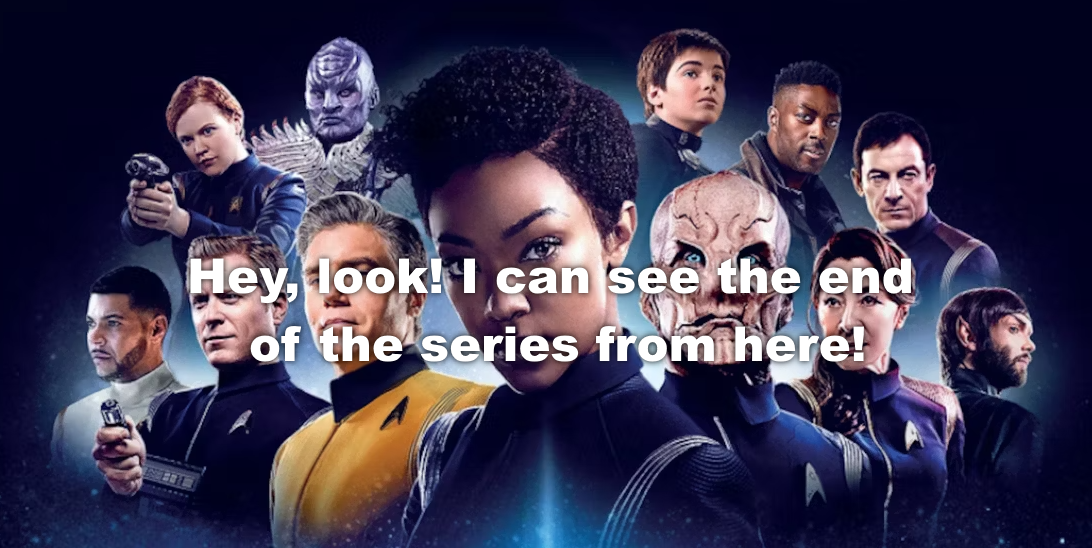

Aww, we’re giving Star Trek: Discovery some credit? Now that it’s over? I was starting to think that pigs were flying and hell had frozen over.
Let me guess, you just realized that the show has a “Black human woman” as its main character? Wow, groundbreaking stuff there. It’s almost like we’ve never seen representation in sci-fi before…except for every other show and movie in existence.
Credit where credit’s due, Discovery has definitely made some strides in terms of diversity and representation. And as a cynical, snarky science fiction blogger, I have to admit that it’s no small feat in a genre that has historically been dominated by white, male protagonists.
But let’s not forget about the “overly ambitious, serialized storylines.” Because apparently having an overarching plot is just too much for viewers to handle these days. We all know what fans really want is a new adventure every week with no character development or depth whatsoever.
But hey, at least they threw in a “space wedding” at the end. That definitely makes up for any lackluster storytelling or weak plots.
Oh, and how could we forget about Michael Burnham being Spock’s secret sister? What a twist! Except it wasn’t really because anyone with half a brain could see it coming from lightyears away.
But despite its flaws, Discovery has sparked important conversations about representation and diversity in media. And that’s something to be commended for. Sure, it may not be perfect, but its impact on the Star Trek canon and pop culture as a whole is undeniable.
They still had a good run. Five seasons ain’t nothing. So celebrate Star Trek: Discovery, but also acknowledge – Discovery is not the be-all and end-all of sci-fi. As the franchise continues to evolve and expand, let’s remember that there are other shows that have done groundbreaking things without trying too hard. And let’s hope that the Star Trek franchise learns from its mistakes and continues to push the boundaries of representation and storytelling in the future.