
Rural solar will be successful when they get the bugs out of the system and figure out how to get the bugs in. Confused? You’re not alone.
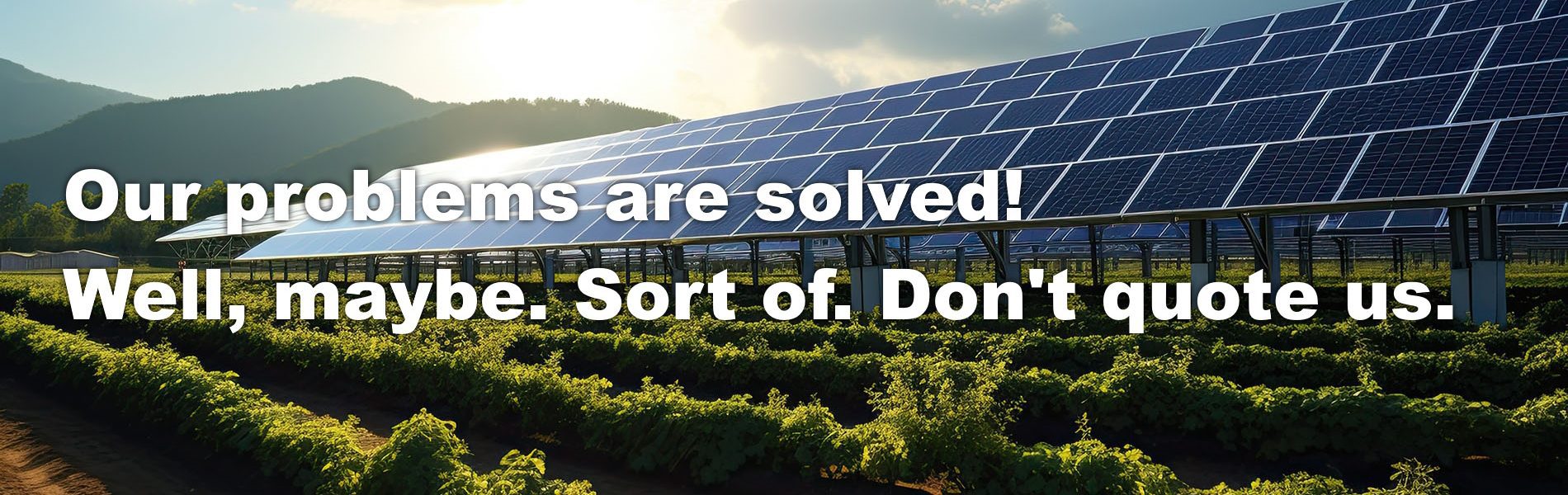
Un their early days of development, no one really bothered with what was happening underneath those shiny rectangles. But now, as they have become cheaper, researchers are finding out that these solar arrays actually benefit crops and preserve insect populations!
The thing that gets me about this is that, apparently, covering acres upon acres of farmland in metal can be good for nature. Move over bees, because here comes Big Solar to save you from extinction…unless they put another panel on top or something.
But wait, there’s more! Not only do these giant fields of panels provide partial shade (great news if you hate sunlight but love farming), but evidence also suggests that pollinator habitats benefit as well. And let me tell you folks, preserving insects is crucial considering how much joy mosquitoes bring us every summer.
In fact, according to researchers at Argonne National Laboratory and the National Renewable Energy Laboratory, five years were spent examining two sites in Minnesota where farmers had generously allowed massive solar installations on their land. Turns out this combination does wonders for native flora as well…you know, unless someone decides it would make a lovely spot for parking lot expansion instead.
Don’t worry about pesky details like traffic flow or durability, because science says all will be fine thanks to “bifacial technology” whatever that means. Or, if that fails, we can just tilt the panels upwards so tractors don’t get stuck. Nothing says efficient like having to move every panel out of the way just to plant some corn. At least the State of New York State has a plan. Plus, there’s a $5 million program to kickstart this agrivoltaic revolution all over the US…because why focus on solving actual issues when we can throw money at shiny new toys?
And what do these lucky recipients have to do in return for their fancy solar panels? Oh, just share data and host educational events – easy peasy, right? I’m sure farmers won’t mind taking time away from actually farming to teach us city folk how wonderful it is being surrounded by metal structures instead of open fields.
To top off this deal too good to be true, NYSERDA explains that “data collected from selected projects will be shared with farmers” as if that wasn’t already part of the whole hosting an event thing. But wait, there’s more – apparently rural areas are mostly made up of land?! Who knew!? And since 86% (yes, folks, according to my calculations) is classified as such in NY then obviously solar development should take priority!
Forget those silly arguments against industrializing farmland or preserving nature; Doreen M Harris has spoken and she knows best! Besides, modern agriculture isn’t exactly known for its eco-friendliness anyways (*cough* factory farms *cough*) so we might as well add giant metallic eyesores into the mix while we’re at it
Oh, but don’t worry guys because a study found minimal impact on the overall amount of land available for farming due to utility-scale arrays which means everything must be fine. Just ignore any pesky details like long-term effects or potential consequences. Downplaying environmental concerns always seems to work out great, amirite?
So next time someone tells you renewable energy comes with sacrifices, remember: now your farm animals get free suntans thanks to Big Solar. And if all else fails, just throw some saffron in there and call it a day – because nothing says sustainable like introducing new high-value crops to an already strained agricultural system.
So go ahead America – let’s embrace this agrivoltaic revolution! Because who needs natural landscapes when you can have shiny metal fields? It might not be the most practical or efficient solution, but hey, at least we’ll look good while our planet burns.